
Nocturnal Activity in Cats: Evolutionary Background and Household Reality

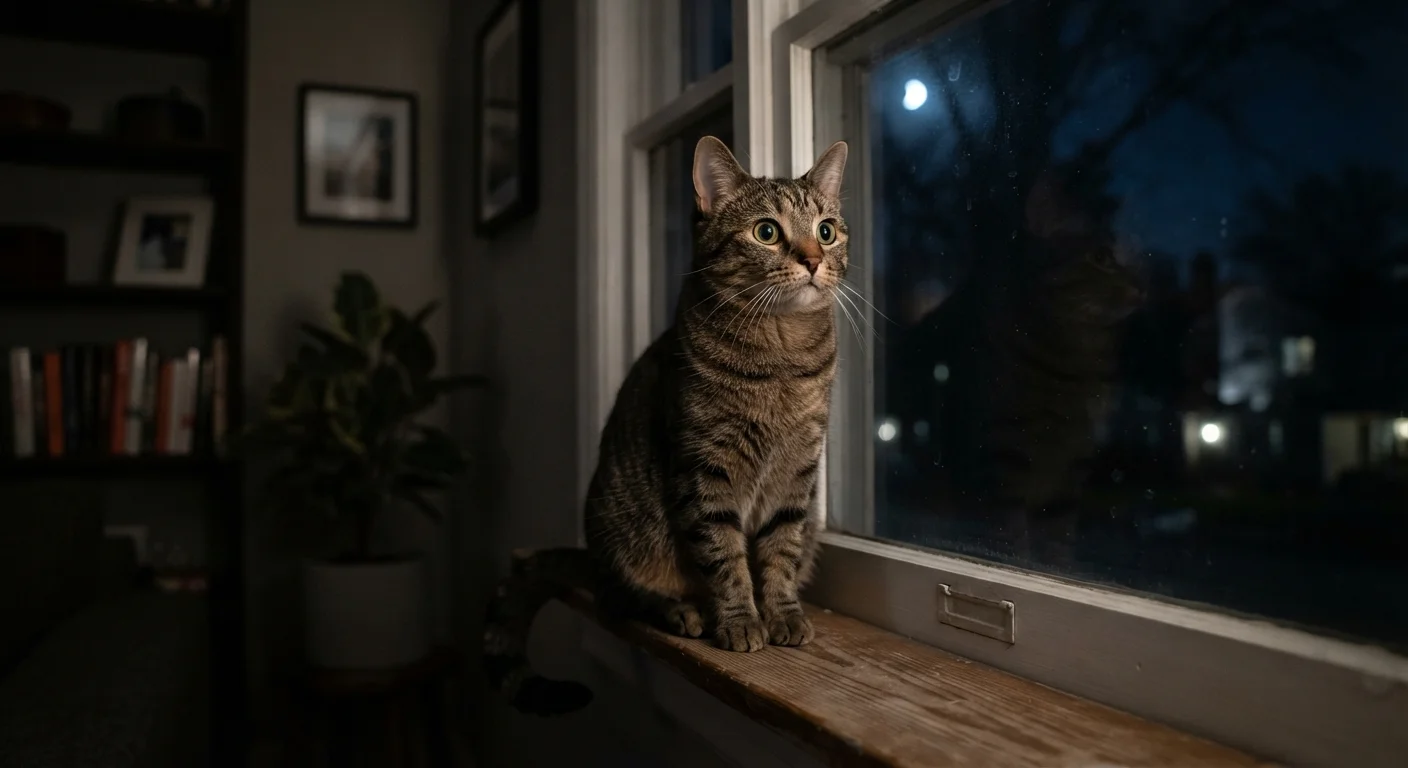
Photo: InsightsVilla.com | Quick Search. Right Info editorial
Key Takeaways
- Cats are crepuscular by nature, with peak activity at dawn and dusk rather than strictly at night.
- Their exceptional low-light vision and predatory instincts drive after-dark energy bursts.
- Household cats often shift activity patterns to partially match their owners' schedules.
- Interactive evening play and consistent feeding routines can reduce disruptive nighttime behavior.
- Sudden changes in a cat's nighttime behavior may warrant a veterinary evaluation.
The Evolutionary Roots of Feline Night Activity
To understand why your cat tears through the hallway at 2 a.m., it helps to look back at their ancestors. The domestic cat (Felis catus) descends from the African wildcat (Felis lybica), a solitary predator that thrived in arid environments by hunting small prey - rodents, birds, and insects - most active at dawn and dusk. This twilight hunting niche shaped cats' biology over thousands of generations.
Key adaptations support this lifestyle. The tapetum lucidum, a reflective membrane behind the retina, amplifies available light so cats see six to eight times better than humans in dim conditions. Their vertical-slit pupils also contract and dilate rapidly, giving them precise control over light intake across a wide range of environments. Combined with acute hearing tuned to the high-frequency sounds of small prey, cats are extraordinarily well-equipped hunters in low-light settings.
As the distinction between instinct and learned behavior makes clear, some drives are deeply embedded by evolution and cannot simply be trained away. Crepuscular activity in cats falls squarely into that category.
6-8×
Better low-light vision than humans
Cats' tapetum lucidum and high rod-cell density give them dramatically superior night vision, as documented in comparative veterinary ophthalmology literature.
~10-15 min
Recommended interactive play before bedtime
Animal behaviorists commonly suggest a structured play-then-feed routine of this duration to trigger the natural hunt-eat-sleep cycle in domestic cats.
2
Peak daily activity windows for crepuscular cats
Research on feral and free-roaming cat populations consistently identifies dawn and dusk as the two primary activity peaks aligned with their ancestral prey's movements.
How Domestic Life Shapes - But Doesn't Erase - the Pattern
Thousands of years of living alongside humans have given domestic cats some behavioral flexibility. Studies of free-roaming and feral cat populations show a strong crepuscular pattern, while household cats often show a broader spread of activity across the day - partly because their owners' schedules, feeding times, and social interactions restructure their environment.
That said, the underlying biology remains. A well-fed indoor cat with no prey to hunt still experiences the physiological urge to stalk, pounce, and sprint. Without an outlet, those drives surface as knocked-over glasses, scratched furniture, or insistent meowing at your bedroom door. This is not misbehavior - it reflects a mismatch between evolutionary programming and a quiet apartment at midnight.
It also connects to a broader issue of under-stimulation. Our guide on recognizing boredom in pets outlines how behavioral signs like restlessness and repetitive vocalizing often reflect unmet enrichment needs rather than disobedience.
Time Your Cat's Last Meal Strategically
Practical Strategies for a Quieter Night
Managing nocturnal disruption starts with working with your cat's biology rather than against it. The most effective approach is structured evening play - a 10- to 15-minute interactive session using a wand toy or feather lure mimics a complete hunt sequence and allows your cat to discharge built-up predatory energy. Follow this immediately with a small meal, which triggers the natural hunt-eat-groom-sleep cycle that leaves cats drowsy and settled.
Consistent meal timing matters, too. Cats fed on a predictable schedule tend to organize their activity peaks around those times. Puzzle feeders and food-dispensing toys extend the mental engagement of mealtime and can reduce the energy surplus that fuels late-night antics.
Environmental enrichment - window perches with outdoor views, cardboard boxes, and rotating toys - gives cats stimulation during daylight hours so they arrive at bedtime less wound up. For multi-cat households, note that territorial dynamics can amplify nighttime activity if cats are competing for resources or sleeping spaces.
If nighttime vocalization is severe, persistent, or begins suddenly in a cat that previously slept quietly, schedule a veterinary visit. Conditions such as hyperthyroidism, pain, and feline cognitive dysfunction can all manifest as increased nighttime restlessness, particularly in older cats. Ruling out a medical cause is always the right first step.
Frequently Asked Questions
The content on this site is for informational purposes only and is not a substitute for professional advice. Always consult a qualified professional for guidance specific to your situation.