
Ways Online Interest Groups Are Changing Hobbies and Subcultures

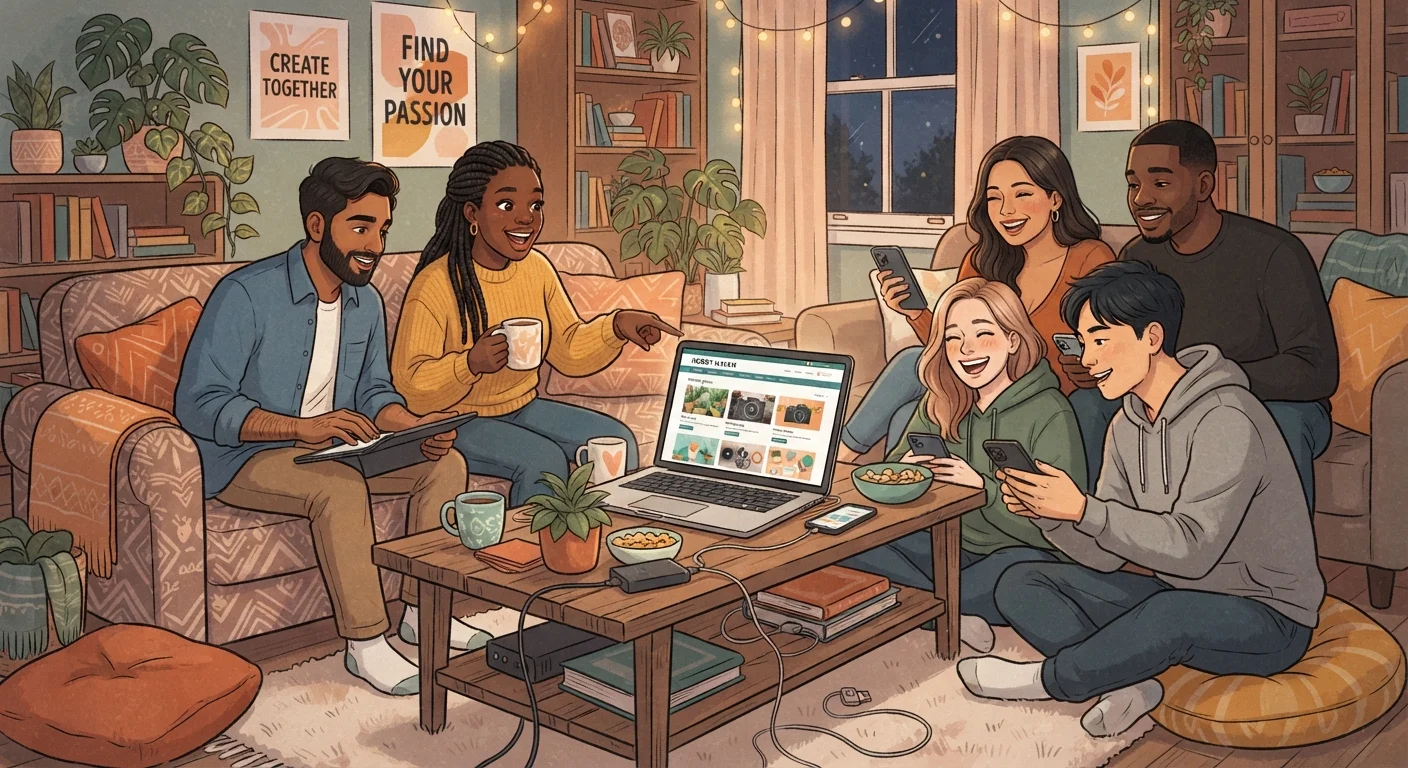
Photo: InsightsVilla.com | Quick Search. Right Info editorial
Key Takeaways
- Online interest groups accelerate how hobbies spread, evolve, and attract new participants.
- Digital communities lower barriers for beginners, making niche hobbies more accessible than ever.
- Collective knowledge-sharing online raises the skill ceiling for hobbyists at every level.
- Subcultures that once stayed local can now build global identity and shared standards.
- There are real tradeoffs to how online groups shape hobbies - including gatekeeping and burnout.
How the Internet Rewired the Hobby Landscape
Not long ago, getting into a niche hobby meant finding a local club, stumbling on a specialty magazine, or knowing the right person. Geography was destiny. If your town didn't have a tabletop gaming store or a quilting guild, your options were limited.
That constraint has largely collapsed. Online interest groups - from Reddit threads to Discord servers to Facebook communities - now connect millions of people around shared passions that once struggled to find a foothold. The effects run deeper than simple convenience. These digital spaces are actively reshaping what hobbies look like, who participates in them, and what it means to belong to a subculture.
Understanding what makes an online community actually work is key to seeing why some of these hobby groups thrive while others stagnate. Below, we look at the most meaningful ways that online interest groups are transforming hobbies and subcultures in America today.
Removing the Geography Barrier for Niche Interests
Hobbies that once required a critical mass of local participants - competitive card games, historical reenactment, niche film movements - can now sustain themselves online regardless of where members live. A person in rural Nebraska can join a community of thousands passionate about the same obscure board game as someone in Brooklyn or Seattle.
This democratization of access has kept many subcultures alive that might otherwise have faded. It's also created space for hyper-specific interests to flourish - communities built around a single decade of cinema, one regional cooking tradition, or a highly specific style of handcraft.
Geography no longer determines which hobbies a person can realistically pursue or belong to.
Accelerating the Spread of Trends and Techniques
Before digital communities, new techniques in crafting, cooking, gaming, or collecting spread slowly - through zines, conventions, or word of mouth. Now, a single tutorial post or short video shared in an active group can reach tens of thousands of hobbyists in days.
This acceleration changes the rhythm of subcultures. Trends rise and sometimes burn out faster. New styles get adopted globally almost simultaneously. For beginners, this is largely a benefit - there's an enormous library of technique and knowledge available immediately. For longtime practitioners, it can sometimes feel like the hobby is moving faster than they can absorb.
Techniques that once took years to spread now move through hobby communities in days.
Raising the Skill Floor - and Ceiling - for Beginners
Online groups have made it dramatically easier to get good at something faster. A beginner knitter can post a photo of a project and receive detailed, constructive feedback from dozens of experienced practitioners. A new home brewer can access years of archived troubleshooting in a subreddit before making a single batch.
The density of peer knowledge in active communities compresses learning curves in ways that self-guided learning or even formal instruction sometimes cannot. At the same time, exposure to highly skilled practitioners raises what members consider "good" - setting higher informal standards across the community.
Peer knowledge in online groups can compress years of learning into months for dedicated beginners.
Shaping Collective Identity and Shared Language
Every strong subculture develops its own vocabulary, inside references, and shared values - and online groups are now the primary arena where that identity gets built. Memes, terminology, canonical debates, and community lore all emerge and solidify through repeated interaction in forums and group chats.
This is how a hobby becomes a subculture. Different platforms shape community differently, but all of them contribute to a sense of shared identity that transcends individual members. Newcomers absorb community norms quickly, and long-standing members become informal keepers of culture.
Online groups are where hobby subcultures forge the shared language and identity that bind members together.
Creating Pathways from Passive Interest to Active Participation
Many people discover a hobby passively - watching videos, reading posts, scrolling through community feeds. Online groups serve as low-stakes entry points where curiosity can turn into participation at the individual's own pace. Lurking is a legitimate stage of community membership.
If you're considering that first step, starting from zero in online communities is more approachable than it might seem. Most active hobby groups actively welcome newcomers who show genuine curiosity and are willing to engage respectfully.
Online groups let curious observers become active participants on their own timeline and comfort level.
Introducing New Tensions Around Gatekeeping and Authenticity
Growth isn't without friction. As hobbies gain mainstream visibility through online communities, debates about authenticity often follow. Who counts as a "real" fan? Is a hobby being diluted by casual participants? These conversations have always existed in subcultures, but online groups amplify them - and give them a wider, sometimes unforgiving audience.
It's worth noting that tight-knit communities can sometimes drift in unhealthy directions. Understanding why tight-knit online groups sometimes turn toxic helps members recognize when a community's standards have crossed from shared values into exclusion.
Online visibility can spark real debates about who belongs - and what the hobby is really for.
The Double-Edged Nature of Digital Hobby Culture
Online communities bring genuine gifts to hobbies - access, speed, depth, and belonging. But they aren't without friction. As subcultures grow online, so do the pressures that come with scale: debates over authenticity, cliques forming around expertise, and the mental load of staying plugged in.
Choose Depth Over Breadth in Hobby Communities
It's worth being intentional about how many communities you join. Belonging to too many online groups at once can fragment your attention and dilute the joy of any single interest. Quality of engagement often matters more than quantity.
What's undeniable is that the relationship between hobbies and community has been permanently changed. Whether you're a runner, a cosplayer, a birdwatcher, or a home brewer, the internet has given your passion a global village - and that changes everything about how the hobby grows, what it values, and how it welcomes newcomers.
Online Groups Don't Replace Offline Experiences
The content on this site is for informational purposes only and is not a substitute for professional advice. Always consult a qualified professional for guidance specific to your situation.