
Anonymous vs. Real-Name Communities: What Changes When Nobody Knows Who You Are
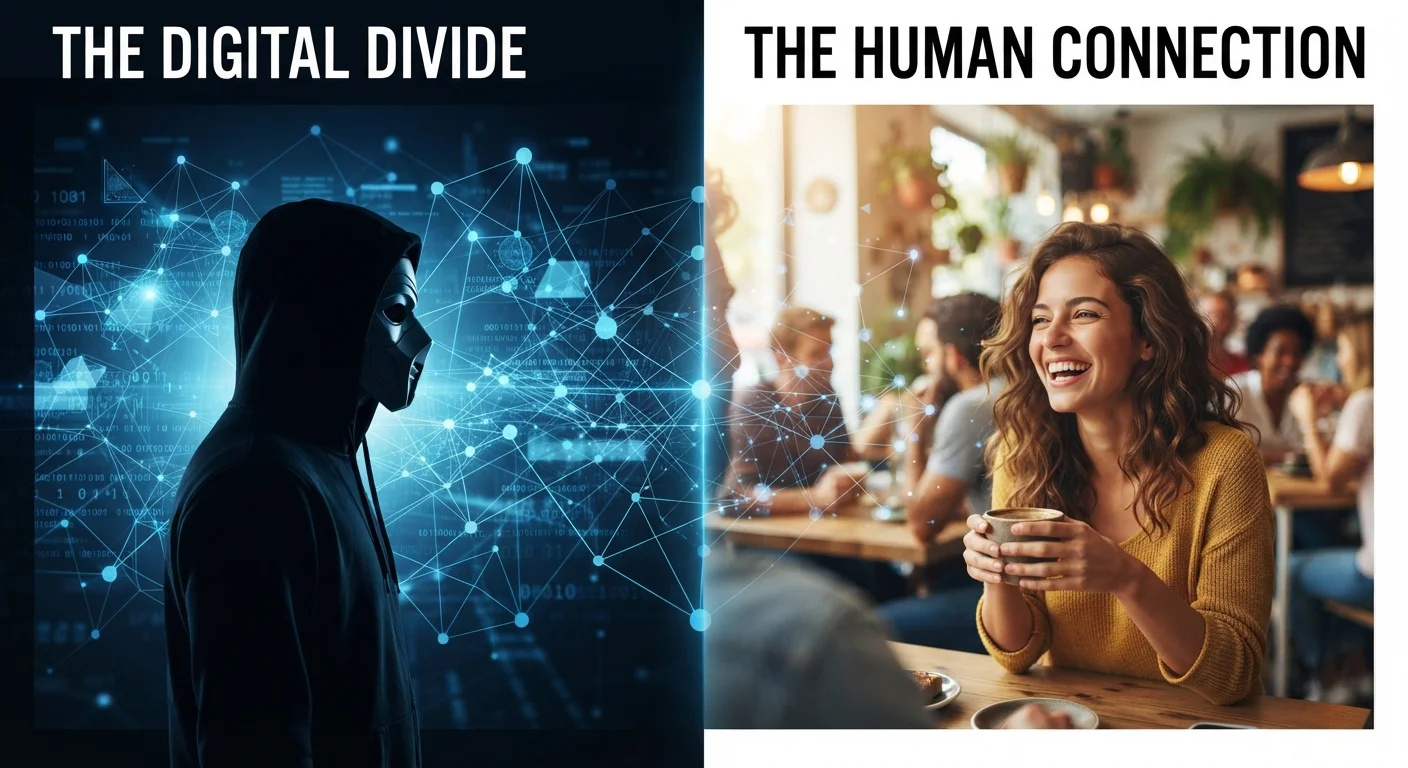
Photo: InsightsVilla.com | Quick Search. Right Info editorial
Key Takeaways
- Anonymity can lower the barrier to honest sharing but also reduces accountability for harmful behavior.
- Real-name communities tend to produce more civil discourse but may silence people with stigmatized identities.
- Neither model is universally safer - the best choice depends on what you need from a community.
- Many platforms now use hybrid models, blending pseudonymity with selective identity verification.
- Understanding how anonymity works online is different from assuming you are invisible.
Why Your Name - or Lack of One - Changes Everything
When you join an online community, one of the first invisible decisions you make is how much of yourself to bring. Do you post under your real name, or do you slip on a username and let the words speak for themselves? That choice - seemingly small - shapes the entire texture of every interaction that follows.
Anonymous communities (or pseudonymous ones, where users choose a persistent screen name without revealing their real identity) include spaces like Reddit, 4chan, and countless niche forums. Real-name communities include Facebook, LinkedIn, and platforms that require identity verification to participate. The difference isn't cosmetic. It fundamentally alters what people say, how they're treated, and who feels welcome at all.
If you're still getting familiar with how these spaces work, our glossary of online community terms breaks down the vocabulary you'll encounter across both types.
What Anonymous Communities Get Right
Anonymity has a genuine superpower: it removes the social cost of honesty. When your employer, neighbors, and family can't trace words back to you, you're more likely to ask the question you're afraid to ask out loud, share an experience you'd never put your name to, or challenge a popular opinion without worrying about the consequences.
This matters most for people whose identities carry real-world risk - LGBTQ+ individuals in unsupportive environments, people navigating addiction recovery, or anyone with a stigmatized health condition. Research in social psychology consistently finds that people disclose more sensitive personal information when they perceive themselves as anonymous. That disclosure can be the first step toward finding community and support.
~50%
Adults who self-censor online due to identity concerns
Pew Research Center surveys have consistently found that roughly half of American adults report holding back opinions online out of concern about professional or social repercussions.
2x
More likely to disclose sensitive topics anonymously
Studies in computer-mediated communication find that people are significantly more willing to share stigmatized personal information in anonymous or pseudonymous conditions than identified ones.
38%
Online adults who have faced harassment
According to Pew Research Center data on online harassment in the US, a substantial share of adults report experiencing some form of harassment in digital spaces, with anonymous platforms cited among the most common venues.
There's also a democratic flattening effect. Without profile photos, job titles, or follower counts, ideas are sometimes evaluated more on their merits. A thoughtful comment from a nobody can rise alongside one from a recognized expert.
For those who feel isolated locally, anonymous spaces can be the first place they find people who truly understand them. See our piece on finding your people online when you feel isolated offline for more on how that search can work.
The Real Costs of Invisibility
Anonymity also removes the friction that keeps behavior in check. When nothing is attached to your real identity, the social consequences for cruelty, harassment, or misinformation shrink dramatically. This isn't a small problem - it's arguably the defining challenge of the modern internet.
Research on what's sometimes called the "online disinhibition effect" suggests that people behave differently - sometimes more openly, sometimes more destructively - when they don't feel personally accountable. Anonymous spaces can become breeding grounds for coordinated harassment, hate speech, and the kind of pile-ons that drive people off platforms entirely.
| Criterion | Anonymous Communities | Real-Name Communities |
|---|---|---|
| Honesty & disclosure | Higher - lower social cost | Lower - real-world consequences |
| Accountability | Low - harder to enforce norms | High - tied to real identity |
| Safety for marginalized users | Often better - identity protected | Often worse - visibility increases risk |
| Harassment & abuse risk | Higher - lower consequences | Lower - identity deters bad actors |
| Trust in information | Lower - credentials unverifiable | Higher - source is identifiable |
| Self-censorship | Less common | More common |
| Community longevity | Mixed - accounts are disposable | Stronger - history is preserved |
There's also a trust problem. When you don't know who you're talking to, it's harder to evaluate credibility. Is that health advice coming from someone with lived experience, or a bad actor? Anonymity makes that question harder to answer. For a practical perspective on staying safe in these spaces, our guide on staying safe when you join a new online community is a useful starting point.
Real Names, Real Stakes
Real-name communities solve some of these problems by tying words to identities. When your comment appears next to your full name and photo, you're generally more careful. Studies of platform behavior - including Facebook's own internal research discussed in academic literature - suggest that identified users tend to post less inflammatory content and engage in fewer pile-ons.
But the same accountability that curbs bad behavior can silence good faith participation. People with marginalized identities, minority political views, or stigmatized experiences may self-censor heavily in real-name spaces. The person with a chronic illness who would freely discuss their symptoms under a username may say nothing under their legal name - because employers, insurers, or family might be watching.
Real-name requirements also create unequal burdens. For someone whose name or appearance marks them as part of a targeted group, visibility isn't neutral. It can be an invitation to harassment that follows them off-platform and into real life. Engaging productively in online discussions requires not just good intentions but also a safe environment to do so.
Pseudonymity Is Not Full Anonymity
The Hybrid Reality Most Platforms Actually Offer
In practice, the line between anonymous and real-name communities is blurrier than it first appears. Most people on Reddit use persistent pseudonyms - they're not anonymous so much as pseudonymous, building reputational history under a chosen name. Discord servers blend both: real-name verification in some professional servers, total pseudonymity in others.
It's also worth noting that online anonymity is rarely absolute from a technical standpoint. Platforms collect IP addresses, device fingerprints, and behavioral data that can be used to identify users - particularly if law enforcement gets involved. For everyday purposes, a username feels anonymous. Technically, it often isn't. Our related piece on why incognito mode is not the same as being anonymous gets into why that distinction matters. For broader privacy guidance, the Internet & Privacy hub is a helpful resource.
What this means practically: choosing an anonymous or pseudonymous community reduces your social exposure but doesn't make you invisible. Choose the spaces that match what you need - honesty, safety, connection, or accountability - with clear eyes about what each model can and can't promise. And whether you're posting with your name or without it, the connections you build can be genuinely real.
The content on this site is for informational purposes only and is not a substitute for professional advice. Always consult a qualified professional for guidance specific to your situation.