
Everything Credit Reports Contain-and Why It Matters

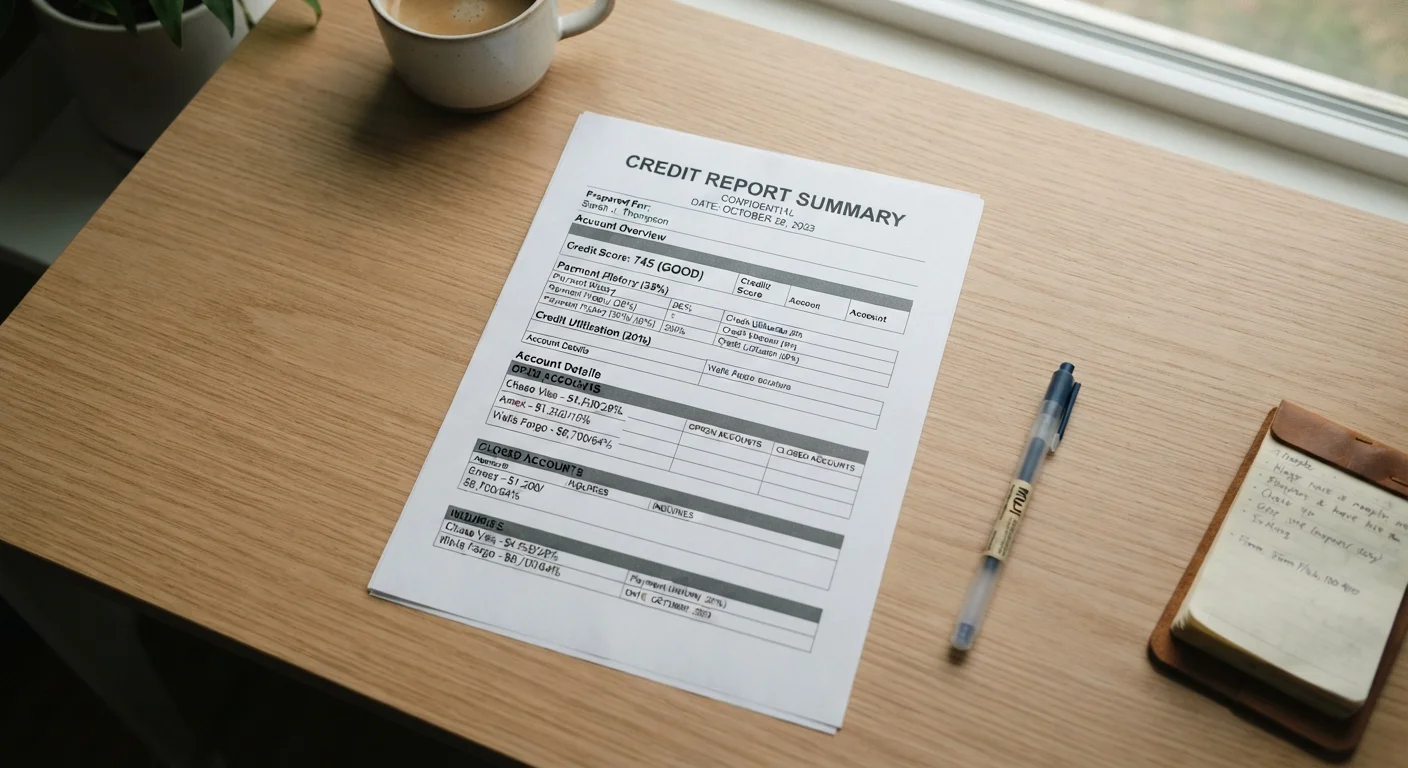
Photo: InsightsVilla.com | Quick Search. Right Info editorial
Key Takeaways
- Your credit report is divided into four main sections: personal info, account history, public records, and inquiries.
- Account history is the most influential section - it tracks payment behavior across every open and closed account.
- Hard inquiries from loan applications can temporarily affect your credit score; soft inquiries do not.
- Each of the three major bureaus compiles its own report, which means they can differ from one another.
- You are entitled to free copies of your reports from all three bureaus through AnnualCreditReport.com.
What a Credit Report Actually Is
A credit report is a running record of how you've managed borrowed money over time. Three companies - Equifax, Experian, and TransUnion - each maintain their own version of your file. They collect data from banks, credit card companies, auto lenders, and other creditors, then organize it into a standardized document that other lenders can review when you apply for credit.
Your report is not a score. It's source material. Scoring models like FICO and VantageScore read your report and calculate a number from it. That distinction matters because two people can have the same score while their underlying reports look very different. This article walks through the report itself - what each section contains and why it exists.
Your Report and Your Score Are Not the Same Thing
Personal Identification Information
The first section of any credit report lists identifying details: your full name (including any variations or former names), current and past addresses, date of birth, Social Security number (partially masked), and sometimes employer information.
This section does not affect your credit score. It exists purely to make sure the file belongs to you and to help match your report to a specific application. That said, it's worth reviewing carefully. An unfamiliar address or a name variation you don't recognize could signal that someone else's data has been mixed into your file - a surprisingly common problem when two people share similar names.
Account History: The Biggest Section
This is the core of the report, sometimes called the tradeline section. Each account - credit cards, mortgages, auto loans, student loans, personal loans - gets its own entry. For every account, you'll typically see:
- The creditor's name and account number (partially masked)
- The type of account (revolving, installment, open)
- Date the account was opened
- Credit limit or original loan amount
- Current balance
- Payment status (current, 30 days late, 60 days late, etc.)
- Payment history going back up to seven years
Creditors report to the bureaus at different times each month, so balances shown in the report may not match what you see in your online account that same day. Credit utilization - how much of your available revolving credit you're using - is calculated from this section and is one of the more closely watched factors in scoring.
It's also worth knowing that installment accounts like mortgages and auto loans behave differently than revolving accounts like credit cards. Our piece on installment loans vs. revolving credit explains how that distinction plays out on your report.
Pull all three bureau reports at the same time, not just one. Since creditors don't always report to all three bureaus, a delinquency could appear on one report but not the others.
When reviewing your account history, pay attention to the 'payment status' field on each tradeline - not just whether an account is open or closed.
Public Records and Collections
This section records serious negative events. Historically it included bankruptcies, civil judgments, and tax liens, though the three major bureaus stopped reporting most civil judgments and tax liens around 2017-2018 due to data accuracy concerns. Bankruptcies still appear and can remain on your report for seven to ten years depending on the type.
Collection accounts show up here too, or sometimes within the account history section. A collection entry means a creditor gave up trying to collect a debt and sold it to a collections agency. Even if you pay a collection account in full, the entry typically remains on your report for seven years from the original delinquency date.
Errors Are More Common Than Most People Expect
Inquiries: Hard vs. Soft
Every time someone pulls your credit report, an inquiry is recorded. There are two kinds:
- Hard inquiries
- These happen when you apply for new credit - a mortgage, auto loan, credit card, or apartment rental in some cases. Hard inquiries are visible to other lenders and can modestly lower your score for a short period. Multiple inquiries for the same type of loan (like rate-shopping for a mortgage) are often treated as a single inquiry by scoring models if they occur within a short window.
- Soft inquiries
- These occur when you check your own report, when a company pre-screens you for an offer, or when an existing creditor reviews your account. Soft inquiries do not affect your credit score and are not visible to other lenders.
Hard inquiries generally stay on your report for two years, though their scoring impact fades well before that.
Stagger Your Report Requests Throughout the Year
How Lenders Actually Use This Information
When you apply for a loan, the lender typically pulls a credit report from one or more of the three bureaus. They're looking for patterns that help them assess risk: Do you pay on time consistently? How much of your available credit are you using? How long have you been managing credit? Have there been any serious delinquencies?
Lenders also set their own internal cutoffs and criteria, which is why two people with identical scores might get different terms from the same lender. The report gives them more detail than the score alone - a lender might overlook a single late payment from several years ago differently than a recent pattern of missed payments.
Understanding what's in your report also helps when something goes wrong. Auto financing, for example, relies heavily on credit report data - creditors check your full file, not just a score. For context on that, see our hub on car ownership and financing.
3
Major credit bureaus that each maintain separate reports
Equifax, Experian, and TransUnion each compile independent credit files, which can contain different information.
7 years
How long most negative items stay on your report
Under the Fair Credit Reporting Act (FCRA), most derogatory marks - like late payments and collections - must be removed after seven years.
1 in 5
Americans with a credit report error
A Federal Trade Commission study found approximately one in five consumers had an error on at least one of their three credit reports.
If you want to understand how the data in your report translates into a specific number, our guide on the five factors that shape your credit score breaks that down in plain terms.
This article is for general informational purposes only and does not constitute financial or legal advice. For guidance specific to your situation, consider consulting a qualified financial professional.
The content on this site is for informational purposes only and is not a substitute for professional advice. Always consult a qualified professional for guidance specific to your situation.