
Leasing vs. Financing a Vehicle: A Side-by-Side Look

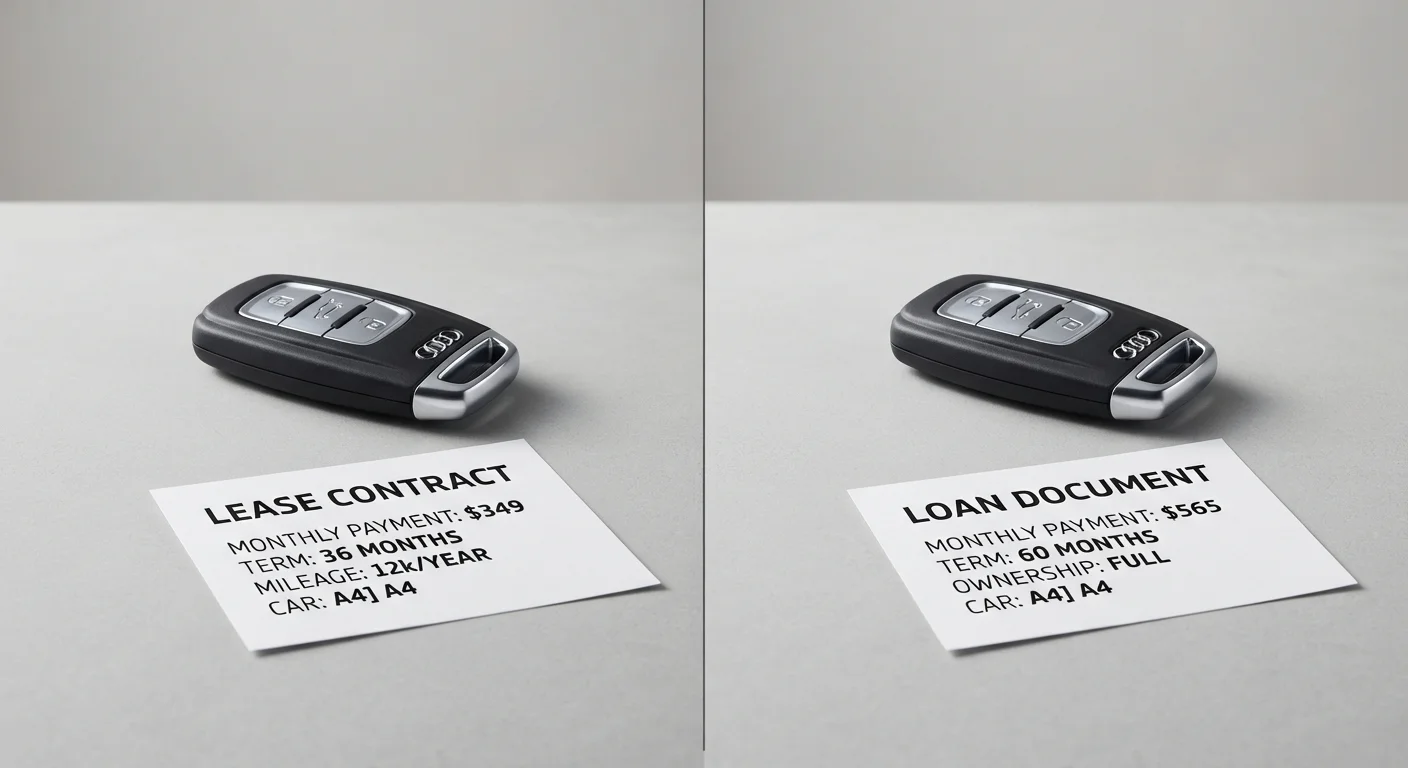
Photo: InsightsVilla.com | Quick Search. Right Info editorial
Key Takeaways
- Leasing typically offers lower monthly payments but you never own the vehicle.
- Financing costs more each month but builds equity and ends with outright ownership.
- Leases impose annual mileage caps - exceeding them triggers per-mile fees.
- Financed vehicles can be modified, sold, or refinanced freely; leased vehicles cannot.
- Long-term, financing is usually less expensive than repeatedly leasing new vehicles.
- Your credit score affects the terms of both leases and auto loans.
What You're Actually Paying For
The core difference between leasing and financing is what your money is buying. When you finance a vehicle through an auto loan, each payment reduces the principal balance you owe. Over time - typically three to seven years - you pay off the vehicle's full purchase price plus interest, and you own it free and clear at the end.
When you lease a vehicle, you're paying for the portion of the car's value that depreciates during your lease term - usually two to four years. The leasing company (often the manufacturer's financial arm) retains ownership throughout. At the end, you return the vehicle, and you have no equity to show for the payments you made.
That distinction shapes nearly every other trade-off between the two options. For a fuller picture of what vehicle ownership costs beyond the payment itself, see The True Cost of Owning a Car in America.
| Criterion | Leasing | Financing (Auto Loan) |
|---|---|---|
| Monthly payment | Typically lower | Typically higher |
| Ownership at end of term | No - return the vehicle | Yes - you own it outright |
| Mileage limits | Yes - usually 10,000-15,000/yr | No limit |
| Ability to modify vehicle | Not permitted | Yes, once owned |
| Early exit flexibility | Limited; fees often apply | Can sell or refinance |
| Long-term cost (10+ years) | Higher - always a payment | Lower - payment ends |
| Equity built | None | Yes - grows with each payment |
| Wear-and-tear liability | Charges assessed at return | No third-party liability |
Monthly Costs, Mileage, and Restrictions
Lease payments are typically lower than loan payments for the same vehicle because you're financing only a fraction of its value. However, leases come with conditions that loans don't.
Mileage caps are a significant constraint. Most leases allow 10,000 to 15,000 miles per year. Exceeding the cap triggers per-mile overage charges - commonly $0.15 to $0.30 per mile - that are assessed when you return the vehicle. For high-mileage drivers, those fees can erode any savings from the lower monthly payment.
Wear-and-tear standards also apply. Lessees are responsible for keeping the vehicle in acceptable condition beyond normal use. Dents, stains, or tire damage beyond the lessor's defined thresholds result in charges at lease-end.
Modifications are off-limits on leased vehicles. If you finance, you can customize, repaint, or upgrade a vehicle as you see fit once it's paid off - or even before, subject to lender agreements.
~30%
Share of new vehicles acquired via lease
Industry data from Experian has historically shown that leases account for roughly a quarter to a third of new vehicle transactions in the U.S.
$0.15-$0.30
Typical per-mile overage fee on a lease
Most lease agreements charge between 15 and 30 cents for every mile driven beyond the contracted annual allowance.
69 months
Average new-vehicle loan term (recent years)
Experian's State of the Automotive Finance Market reports have tracked average loan terms trending toward or beyond 69 months in recent years.
Long-Term Cost Reality
The math shifts significantly when you think beyond a single contract. A financed vehicle, once paid off, can serve you for years with no monthly payment - your only ongoing costs are maintenance and insurance. That payment-free window represents real savings over time.
Repeatedly leasing, by contrast, means you always have a monthly payment and never accumulate an asset. Over a decade or more, serial leasing generally costs more than buying and holding a vehicle. That said, individual circumstances vary, and factors like interest rates, vehicle depreciation, and your actual driving habits affect the real numbers.
It's also worth noting that both options are affected by your credit profile. Lenders price auto loans based on your credit score, and leasing companies factor it into the money factor - the lease equivalent of an interest rate. Strong credit improves terms for both. For more on how credit intersects with borrowing, the Credit & Debt hub covers the essentials.
If you're also weighing whether a loan makes sense compared to paying cash outright, Buying a Car With a Loan vs. Paying Cash: What Changes walks through that comparison in detail.
This article provides general financial information about vehicle leasing and financing options. It is not personalized financial or legal advice. Readers are encouraged to consult a qualified financial professional before making decisions based on their individual circumstances.
The content on this site is for informational purposes only and is not a substitute for professional advice. Always consult a qualified professional for guidance specific to your situation.